The real price only shows at checkout
The menu price leaves out delivery, platform fee, taxes and the coupon. To compare, you nearly place two orders.
Feature concept · Siri
Before every order I open Swiggy and Zomato, add the same dish in both, apply coupons and compare the final bill. I designed a way to ask Siri instead: it compares the same dish on both apps, like Google Flights compares airlines, by final price, delivery time and rating.
Chicken biryani bowl from Paradise
Sort the apps, or tap one to see its bill
“I usually go to Swiggy and Zomato, search the prices, check wherever I’m getting the lower price with coupons, and continue there.”
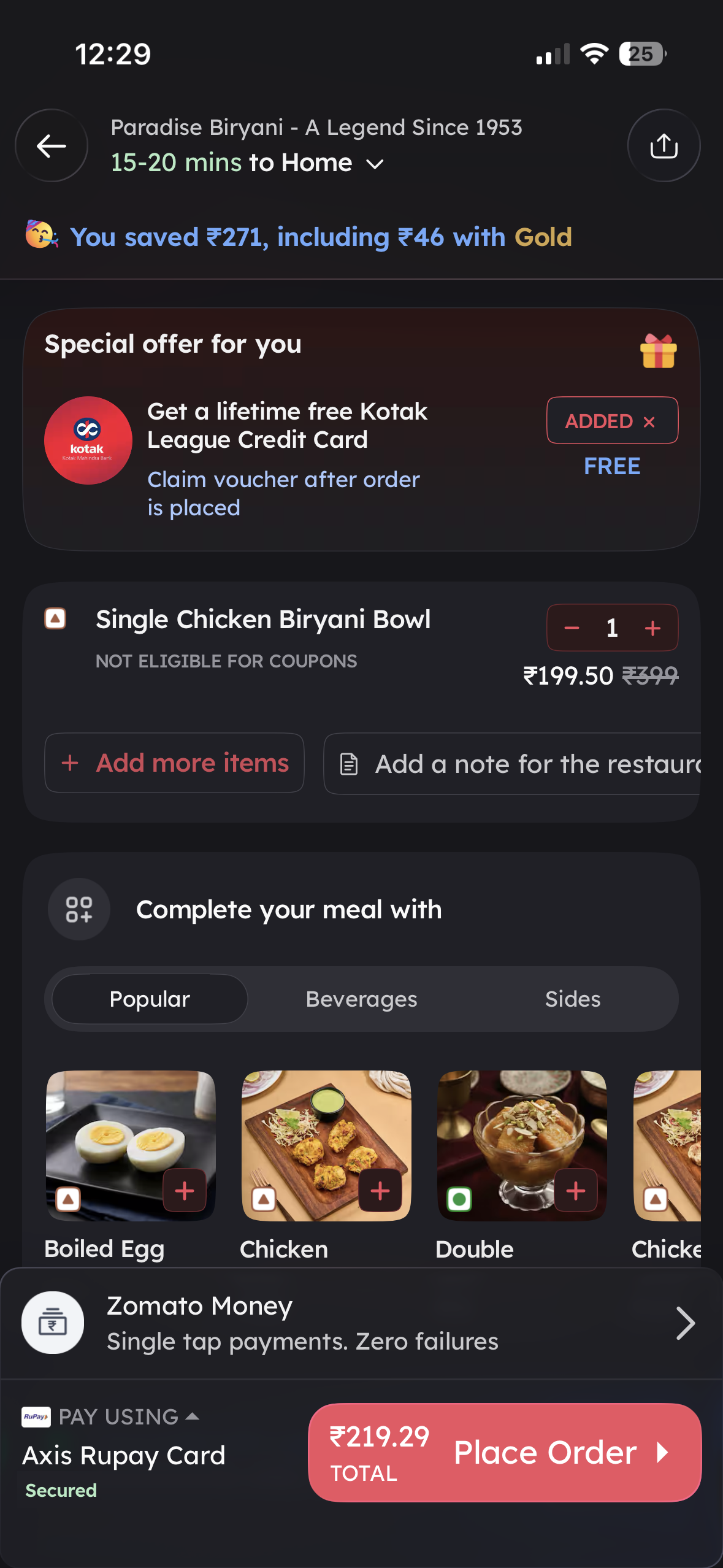
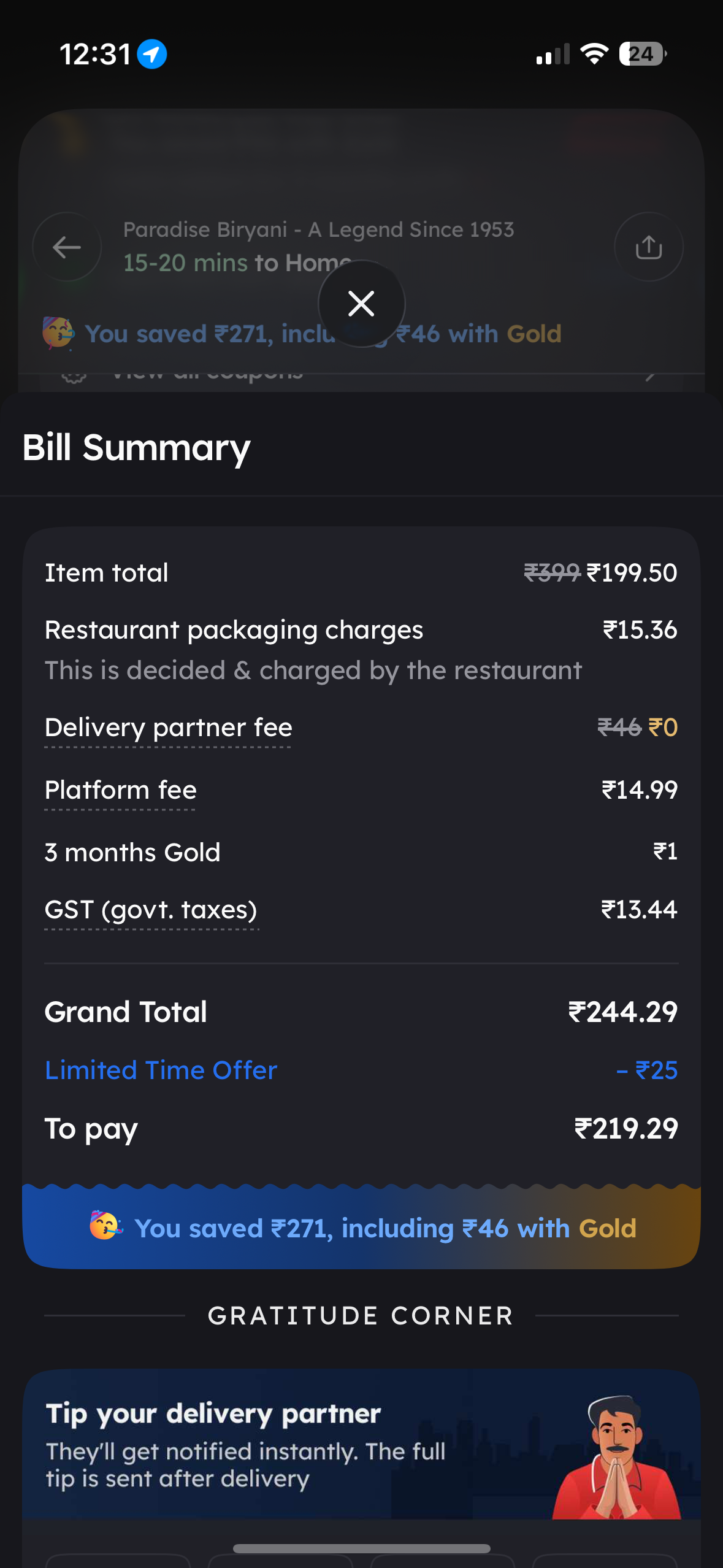
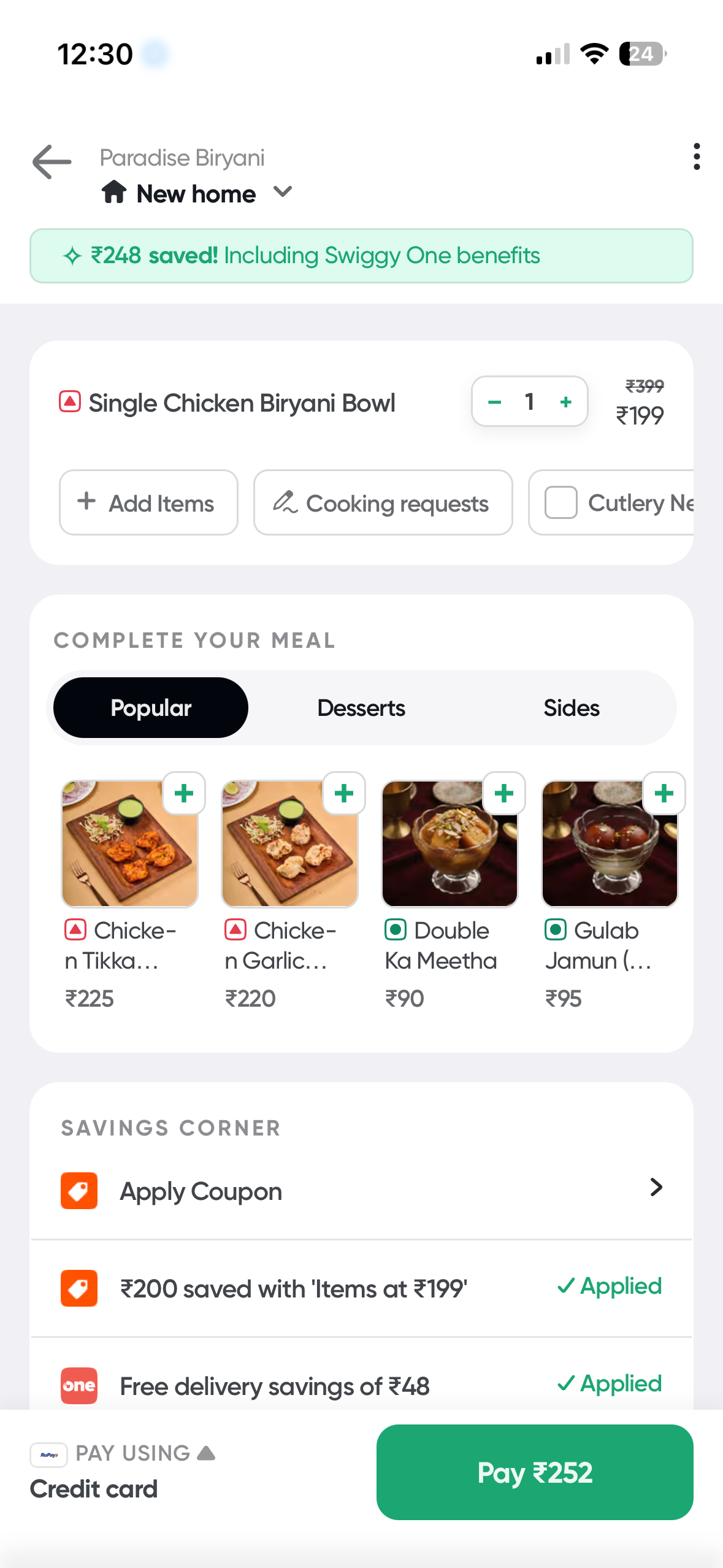
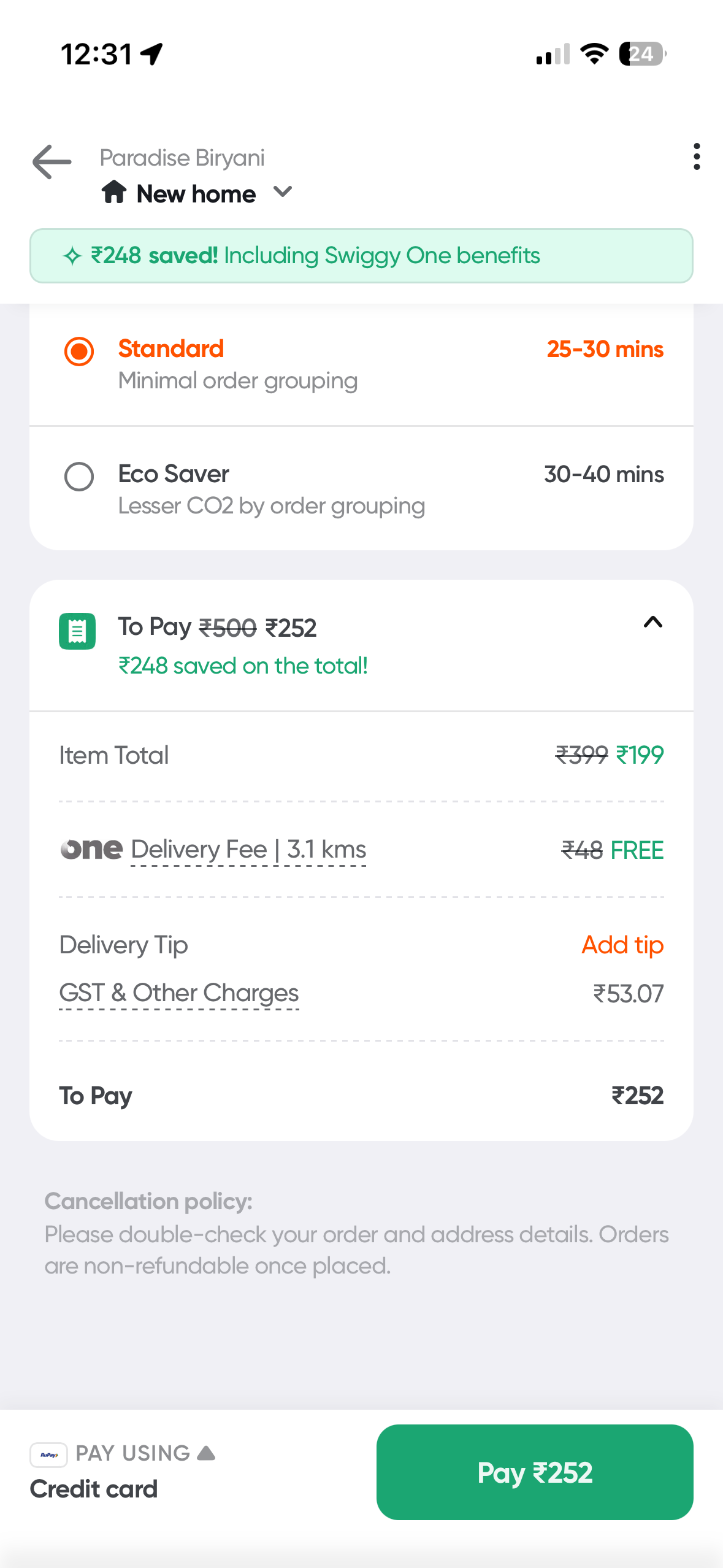
My real order: the same bowl, from the same restaurant, checked on both apps a minute apart. Both say I “saved” over ₹240. Neither tells me the other is cheaper.
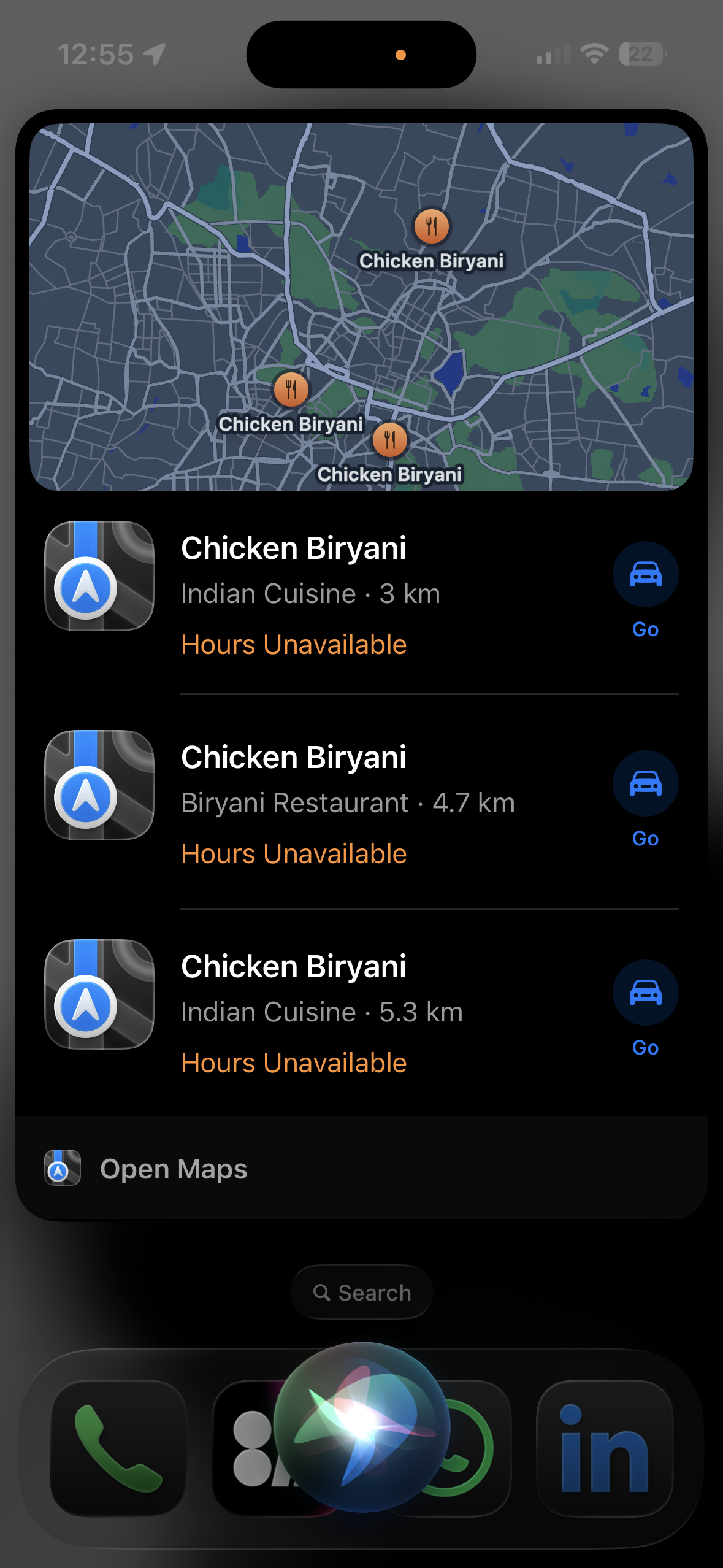
I asked Siri for chicken biryani. It showed three places called “Chicken Biryani” on a map, with distances and a Go button for directions. Nothing about delivery, what it would cost, or which app to order from.
What I do before every order
Compare the two numbers in my head, then go back to the cheaper app and order.
The menu price leaves out delivery, platform fee, taxes and the coupon. To compare, you nearly place two orders.
Zomato lists packaging, a platform fee, taxes and an offer on separate lines. Swiggy folds them into one “GST & other charges” line. You can’t compare line by line, only the final number.
Both of my bills already include my memberships, Zomato Gold and Swiggy One. Someone without them, or with a different bank card, would see different totals.
The cheaper app might take 15 minutes longer, or the restaurant might be rated lower there. You weigh all of it in your head.
Same ₹199 bowl. ₹33 apart at checkout.
Both apps list the bowl at about ₹199, down from ₹399. But after packaging, fees, taxes and offers, Zomato asks ₹219.29 and Swiggy ₹252. Zomato is also about 10 minutes faster. The only way to find that out today is to go to checkout on both.
Flights solved this years ago
Nobody opens five airline apps to find the cheapest flight. Google Flights puts every airline on one screen with the price, the time and the stops, and you book with the airline you pick. Airlines take part because it brings them customers who are ready to pay. Food delivery is the same kind of choice, with two big players.
So every row compares three things:
What you’ll actually pay after delivery, fees, taxes and your best coupon. Not the menu price.
How long each app says it will take right now.
The restaurant’s average rating on each app, with how many people rated it.
Say “Hey Siri, chicken biryani bowl from Paradise”.
One row per app: final price, delivery time and rating, with Cheapest and Fastest tags.
Tap a row to see the full bill, so you can see where the difference comes from.
Tap “Order on Zomato” and Zomato opens with the bowl in your cart and the offer applied. You just pay.
The menu price is what misleads people today. The big number in every row is the amount you’ll actually pay.
Like Flights, you can sort by cheapest, fastest or best rated, because on some days ₹33 matters and on others 10 minutes does.
Payment and addresses stay in each app. Siri compares and the app completes the order, which is easier to trust and to build.
When the names differ, both names are shown, so you can see they’re the same dish before you trust the comparison.
Swiggy and Zomato are direct rivals, and neither wants to send you to the other. So this can’t live inside either app.
Apple has no food delivery app of its own, so it’s neutral. Apps already plug actions into Siri through App Intents, and like airlines on Flights, they’d join because Siri sends them customers who are ready to pay.
To show your coupons, you link your Swiggy and Zomato accounts once, and you can unlink them any time.
Version one compares the same dish from the same restaurant. Suggesting a cheaper biryani elsewhere can come later.
This is a concept, so nothing here has been tested yet. Here is what I’d measure.
From asking for the dish to paying, compared with checking both apps by hand.
The difference between the app people chose and the other one, per order.
How often people still open both apps after using the comparison. If they do, they don’t trust it yet.
Do they go for the cheapest, the fastest or the best rated? That shows what matters most.