No driver accepts
A supply and pricing problem. Design can’t make more autos appear.
Feature concept · Uber
At a busy metro exit, every auto looks the same, and the driver can’t tell which of 200 people booked the ride. I designed two small additions: riders see a real photo of their vehicle, and drivers see a photo of the pickup spot.
“Hard to find a cab” is really two problems. Only one of them is a design problem.
A supply and pricing problem. Design can’t make more autos appear.
The auto has arrived, but the rider can’t spot it and the driver can’t spot the rider. This one is a design problem.
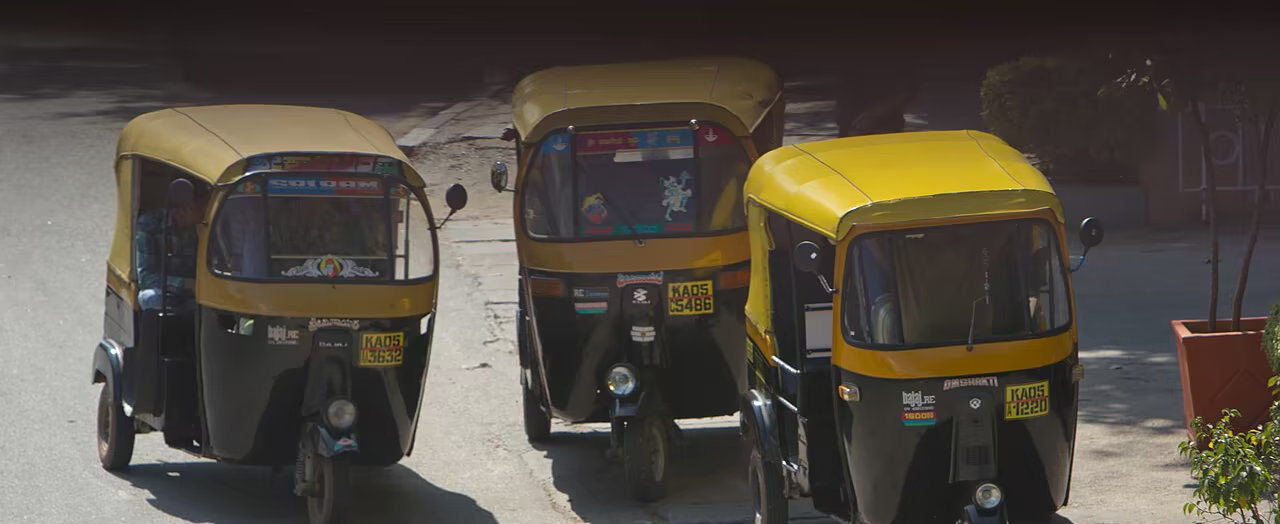
The app shows a generic icon, a colour and a plate number. From 20 metres away, in a row of yellow roofs, none of those help.
A pin in a crowd is just a dot among hundreds of people, and GPS drifts near big buildings.
“Where are you?” calls in a noisy street, sometimes without a shared language, end in waiting or cancelled rides.
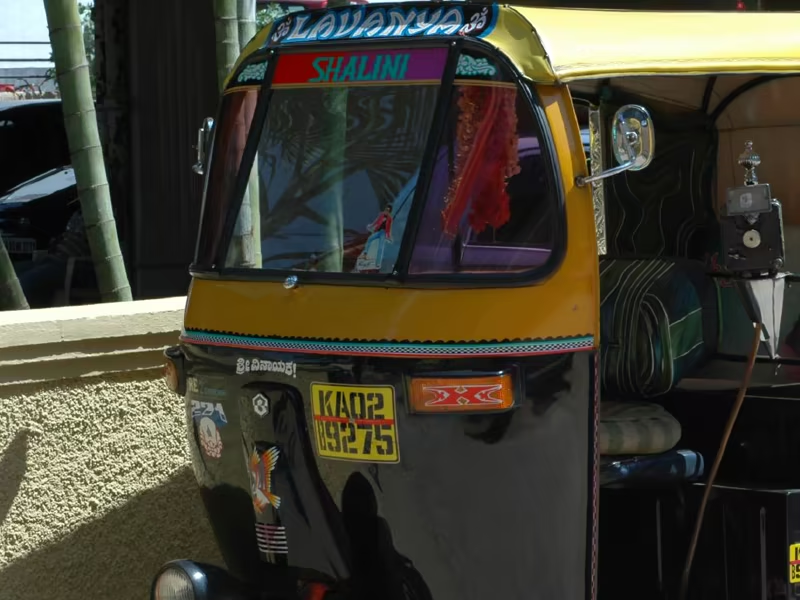
Autos look alike from far away. Up close, every one is different.
Drivers decorate their autos with hand-painted names, stickers, tassels and posters. A generic icon throws all of that away. A real photo keeps it.
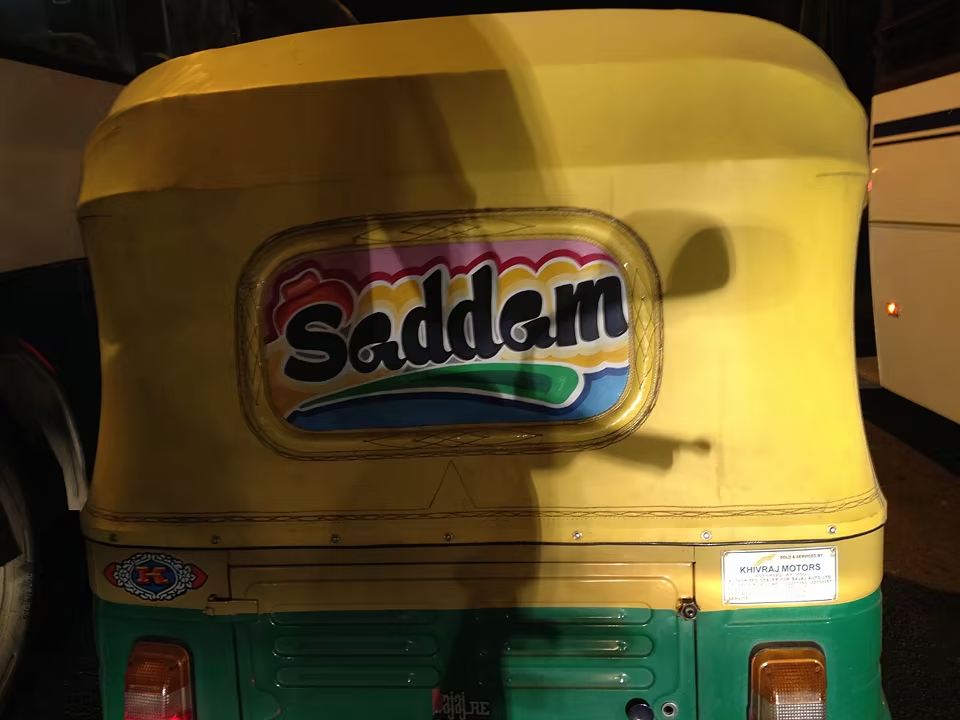
Not an illustration, but the actual auto. The app picks the side you’ll see: the front when it’s coming toward you, the side when it pulls up next to you.
The rider can add one photo of where they’re standing, like a gate, a sign or a shop. It shows the place, never the person.
Drivers photograph the front, back and both sides once. The app checks the plate in the photos and asks for new ones every few months.
Front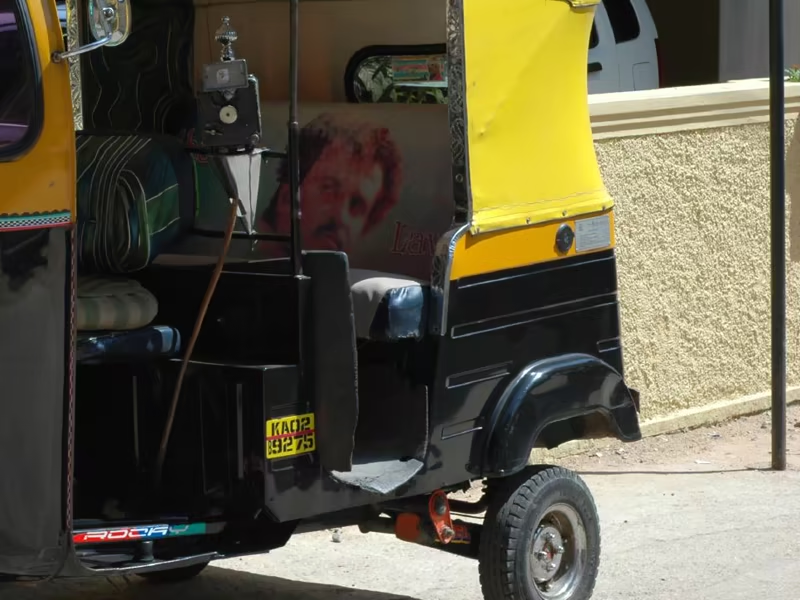 Left side
2 of 4 photos
Sending a photo to a stranger is a real worry, especially for women riding alone. These rules come first.
The camera opens with a frame that says “Show the spot, not yourself”. Faces in the photo are blurred automatically.
Nobody wants extra steps in a crowd. Skip it and the ride works exactly as it does today.
The photo is only shared with this driver, and it’s deleted when the trip starts.
At busy places like metro exits, the app can suggest photos of the spot that Uber has already checked, so riders don’t have to take one.
Riders need something they can take in at a glance, not a model to rotate in a crowd. Four photos can’t make an accurate model either, and AI that fills in the gaps can invent details that aren’t really there. It’s also heavy on budget phones and patchy data.
Uber once tested “Beacon”, a light that glowed in a colour the rider picked. It needs a device in every vehicle, and in India most rides are autos and bikes. A photo needs nothing new in the vehicle.
This is a concept, so nothing here has been tested yet. Here is what I’d measure, at crowded spots like Majestic, metro exits, the airport and malls.
From “driver arrived” to “trip started”. This is the time people spend searching for each other.
Calls between rider and driver after the driver arrives.
Rides cancelled after the driver has already arrived.
How many riders add a spot photo, and how often drivers open it.
Numbers show what happened, not why. So after some rides I’d show a small sheet with one question: did the photo help? A “no” asks for the reason, and that tells me what to fix.
Trip complete · Majestic Metro
Did the photo help you find your auto?